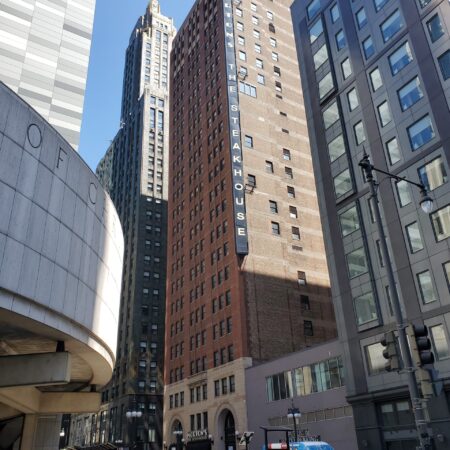
65 East Wacker
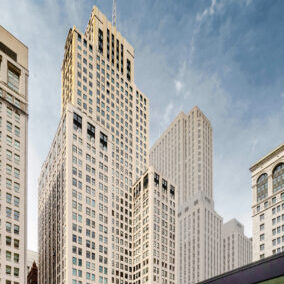
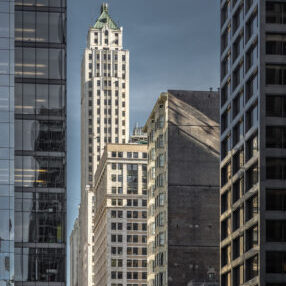
The 24-story art deco office tower near Chicago’s Riverwalk will be transformed into 252 residential apartments, while preserving its historic lobby and the restaurant Morton’s Steakhouse. Originally built in 1928, the building is listed on the National Register of Historic Places.

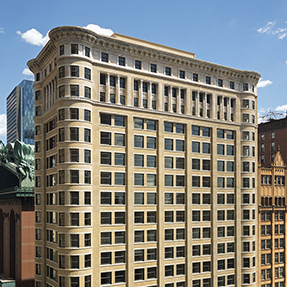
The Pittsfield Building
Located at 55 East Washington, this landmark will undergo a major transformation. 214 new apartments will be added, including affordable units, to the existing 228 residences. Restoration plans include revitalizing the iconic central atrium, repairing the white terra cotta facade and copper roof, and creating a 23rd-floor outdoor space with sweeping lake and skyline views.
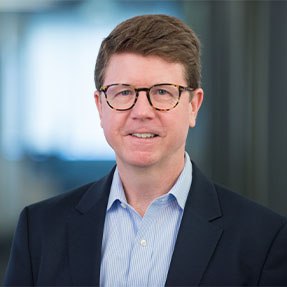
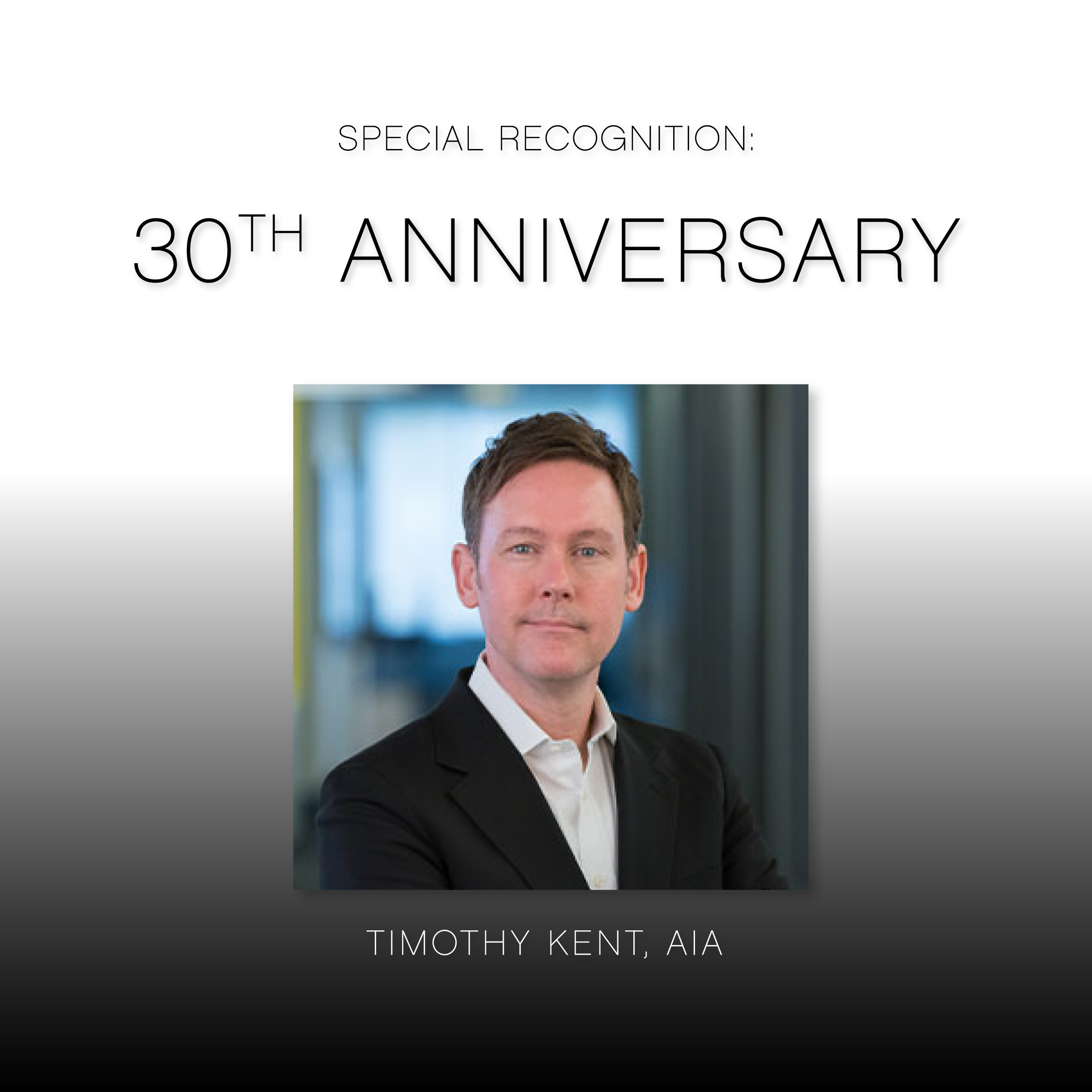
Tim Kent, Partner at PH and part of the design team at the Pittsfield said “An opportunity to transform one of the most iconic and historic towers in the Loop doesn’t come along every day. But it isn’t just about this building alone; it’s a chance to think more broadly about the Pittsfield’s role as a catalyst for further downtown development and the creation of a vibrant, 24-hour neighborhood.”

The Clark Adams
Located at 105 W. Adams St., the historic 41-story Clark Adams Building was completed in 1927 by the sons of architect Daniel Burnham and they will now be converted from offices to a vibrant residential development. Approved for TIF funding the site is a part of the City’s LaSalle Street Reimagined initiative. The project has preliminary Chicago landmark status and will have 400 apartments, including at least 30% affordable units, on floors 12 through 38. The existing hotel will remain, with new commercial space on the lower floors.
Ken DeMuth, Partner at PH and part of the design team for the Clark Adams, notes: “The building’s heavily sculpted plan yields generous glazing all around the shallow floor plate, resulting in well-lit interiors and evocative views of some of Chicago's greatest architecture. An amenity and outdoor recreation program on the 23rd floor sits perfectly, overlooking one of Chicago’s premier outdoor rooms — the Federal Center — where residents can take in some sun and renew their urban spirit.”

Although these new projects mark exciting milestones, they’re far from being PH’s first adaptive re-use projects. Below is a timeline showcasing some of our most memorable transformations over the years:
2015 - Arc at Old Colony
Originally completed in 1893, this 17-story building was one of Chicago’s early examples of skeletal steel-frame construction. By 2014, the building was mostly vacant and in disrepair. The restoration by our team at PH transformed it into 137 residential units with ground-floor retail, added a penthouse terrace, and carefully restored the second-floor banking hall. Key historic features, such as monumental wood windows and corridor glass, were upgraded with fire-rated overlays to meet todays codes while still preserving their character. The site is one of 11 historic Chicago buildings to be included in an application for a Unesco World Heritage Site.

2014 - Infinite Chicago
For the Steger, Gibbons, and Pickwick conversion, three historic Loop buildings were merged into a student housing and retail mixed-use complex. The renovation recreated street-level commercial space including the historic Pickwick Place stables, now a coffee shop. Modern recreation and fitness amenities were added to the second floor, together with a rooftop terrace and event space for a diversity of community oriented activity functions. A restored lobby and enhanced streetscape helped reconnect this corner with Chicago’s large campus environment.

2013 - The Park Monroe
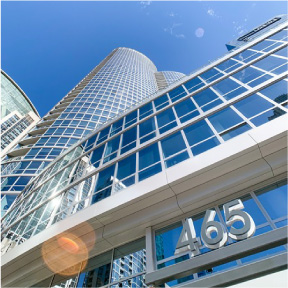
A major two-phase conversion at 65 East Monroe, this project transformed the upper 10 floors of a commercial mixed use high-rise into 215 luxury condos. The ground floor lobby was thoughtfully composed to segregate residential occupants, pet owners and professional tenants circulation without compromising the experience. The residential floors received an innovative operable window wall system and private terraces that were installed before the original curtainwall was removed. . A new entrance with a canopy and marquee was added, and penthouse amenities like a four season landscaped rooftop, sky deck, hot tub, pool, fitness center, and community spaces were added.

2008 - Richelieu Flats
This adaptive re-use project at 318 South Michigan Avenue required a delicate balance of preservation and new construction. The building’s historic facade was restored replacing a missing cornice with monumental operable windows for residential use. The rear portion of the building was replaced with a new parking structure serving both Richelieu Flats and the adjacent Metropolitan Tower. The top floors include a luxury duplex penthouse overlooking Grant Park, set back to respect the Michigan Avenue historic corridor.

2008 - Metropolitan Tower
This iconic limestone-clad office building on Michigan Avenue was reborn as mixed-use residential condominiums, ground-floor retail, and parking. A full floor within the building was demolished in order to insert two new parking decks in its place, allowing for a shorter more compact arrangement that is concealed behind street facing dwelling units. The project preserved the building’s most distinctive features: its iconic blue beehive dome, detailed bronze-and-marble lobby, and stately facade. Overlooking Grant and Millennium Park, it remains a standout example of ambitious urban adaptive re-use project.

2001 - The Fisher Building
The 1896 neo-Gothic high-rise by D.H. Burnham & Co. was converted into apartments after decades of decline. The comprehensive rehab done by our team at PH involved replacing over 6,000 terra cotta pieces, restoring 1,200 historic wood windows, and reconstructing both original entrances. Inside, marble floors, mosaic tile, and mahogany trim were repaired. Once one of the tallest buildings in the U.S., the Fisher Building now stands as a model of historic preservation through adaptive re-use.

Adaptive re-use is more than a design trend, it’s also a way to preserve the history, character, and sustainability of our cities. At PH, we've embraced this approach for a long time, breathing new life into structures with deep roots and lots of potential. We're excited to continue that legacy in Chicago, where new projects offer new opportunities to honor the past while building for the future. And we’re only getting started!