

Bringing Life Above Rainey Street
What now appears as a dense skyline of towers in Rainey Street was once defined by converted bungalows, food trucks, and shipping container restaurants. Before the rapid evolution of downtown Austin, Rainey Street offered something distinctly local, a walkable environment layered with history and personality. As the neighborhood transformed through rezoning and urban growth, a new challenge emerged: how do you design a high-rise that belongs to Rainey Street without erasing the character that made the district special in the first place? At Paseo, the design response was not to compete with the neighborhood’s history, but to reinterpret it.
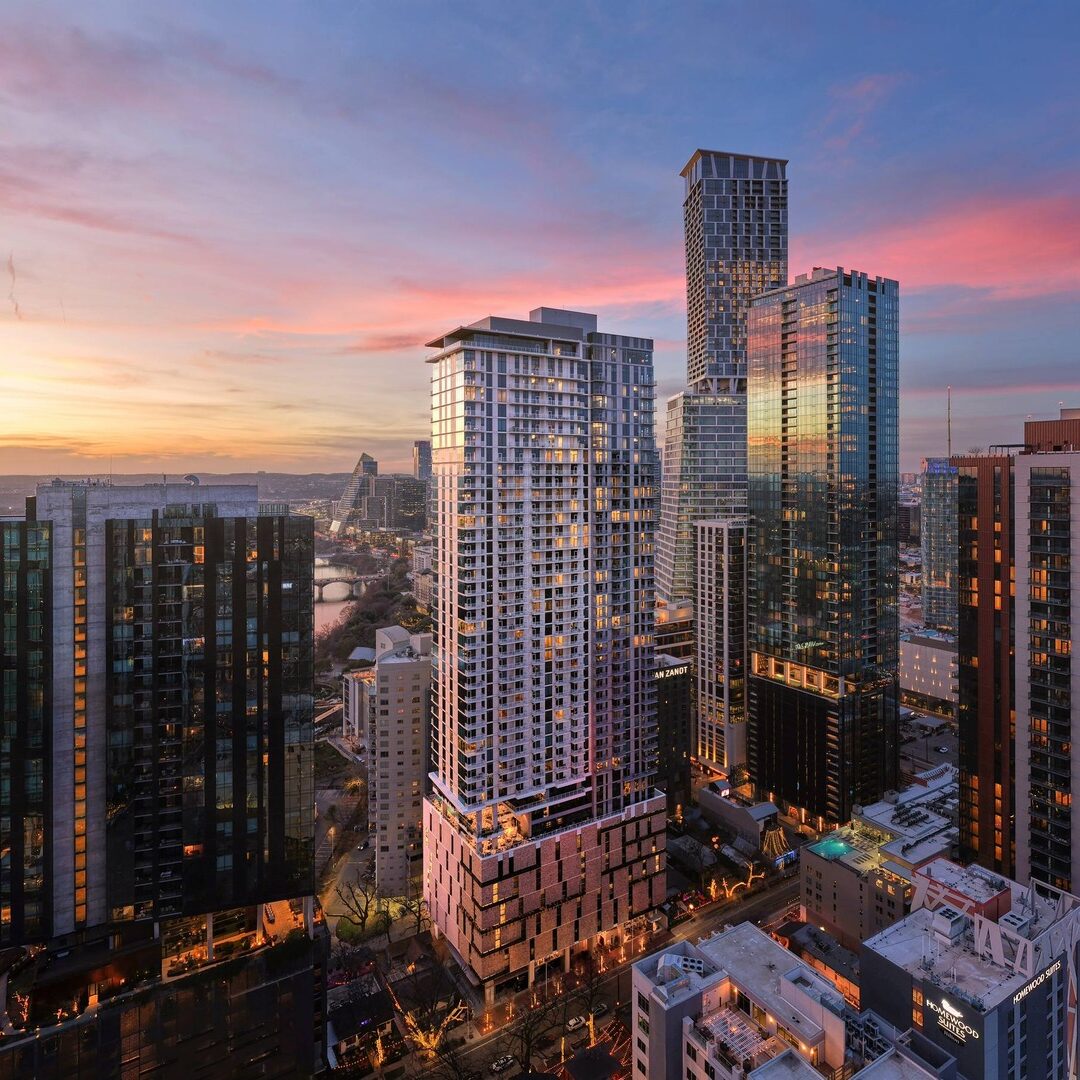
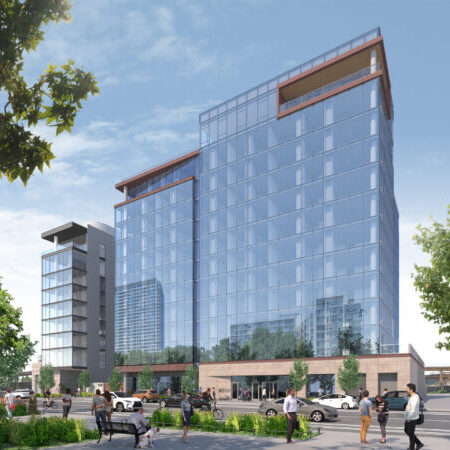
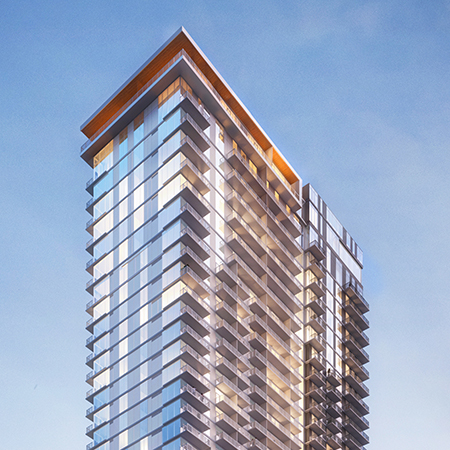
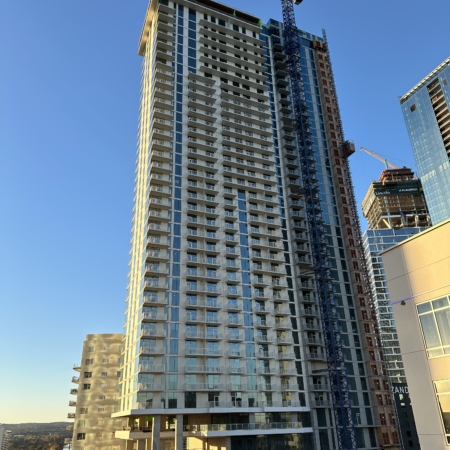
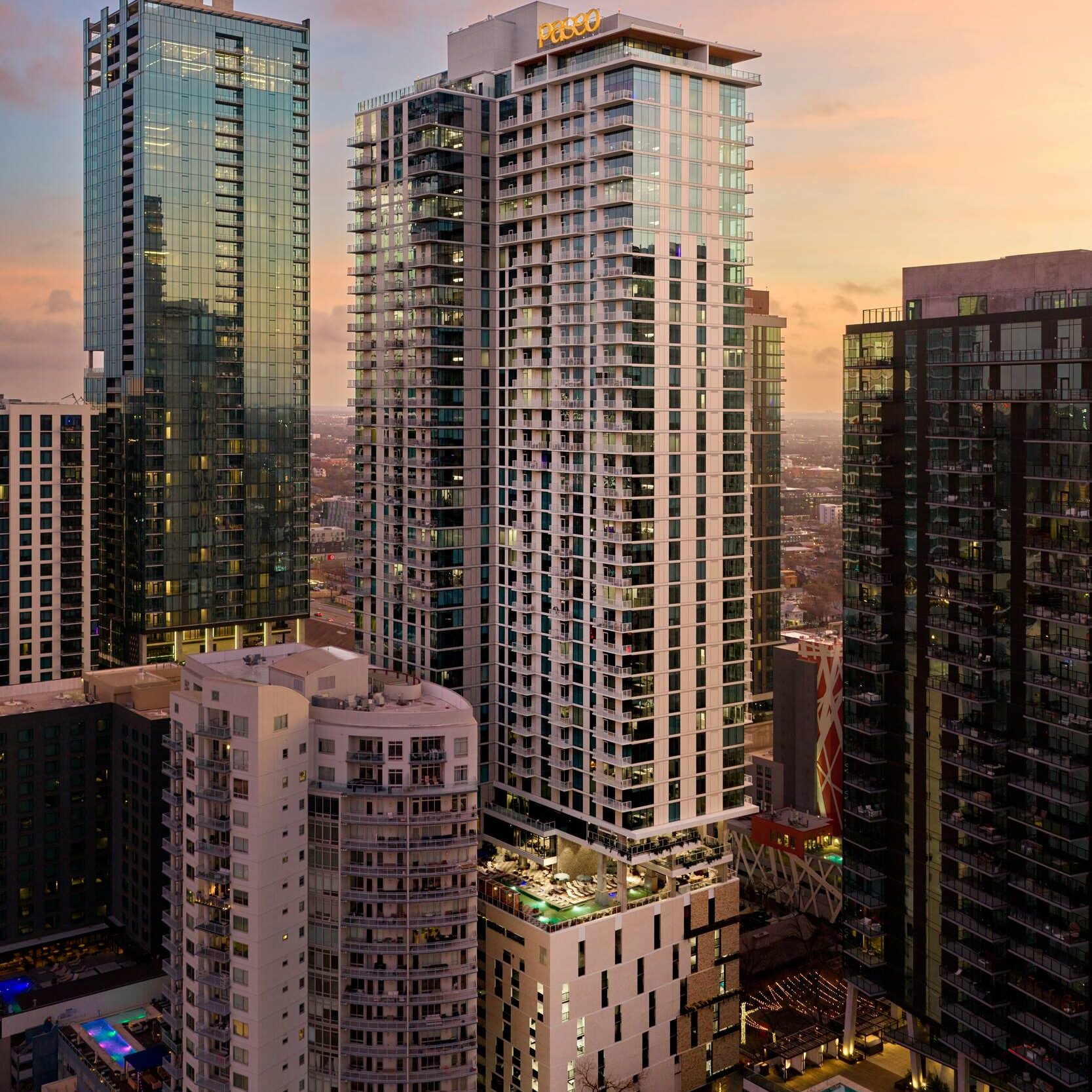
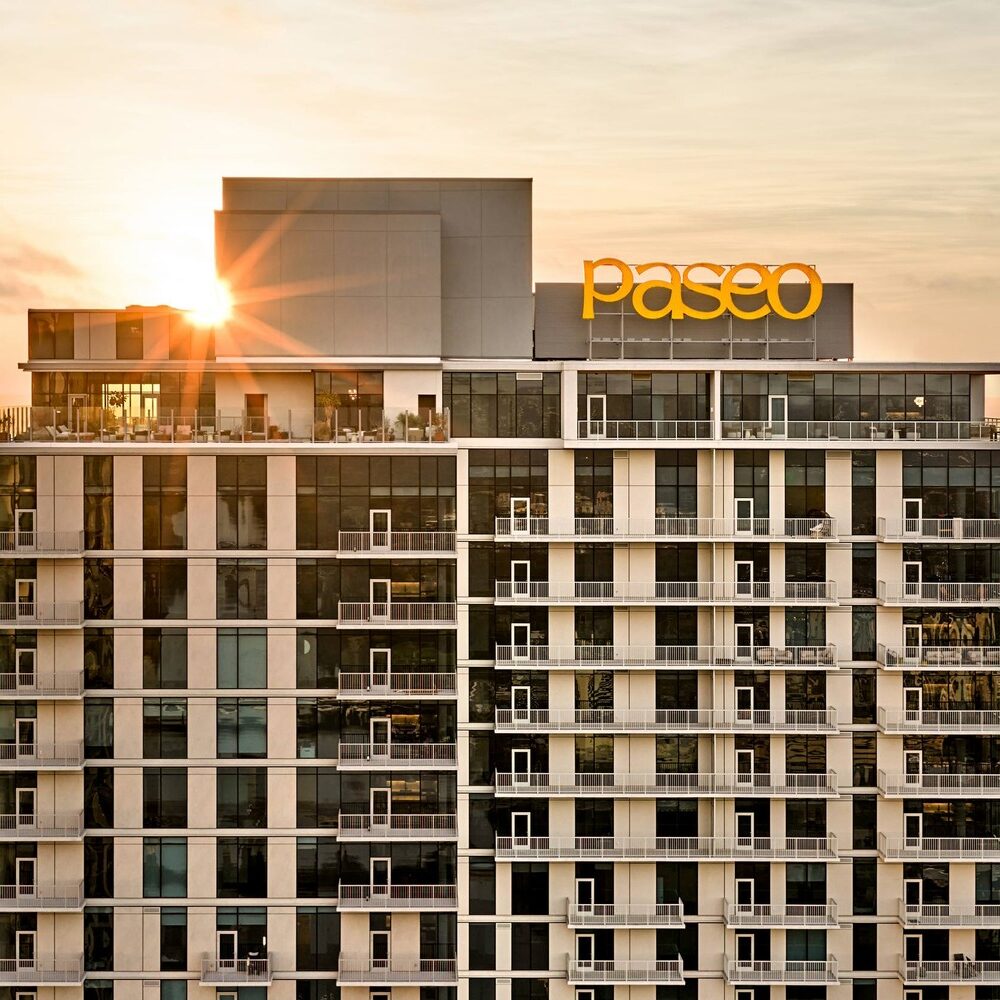
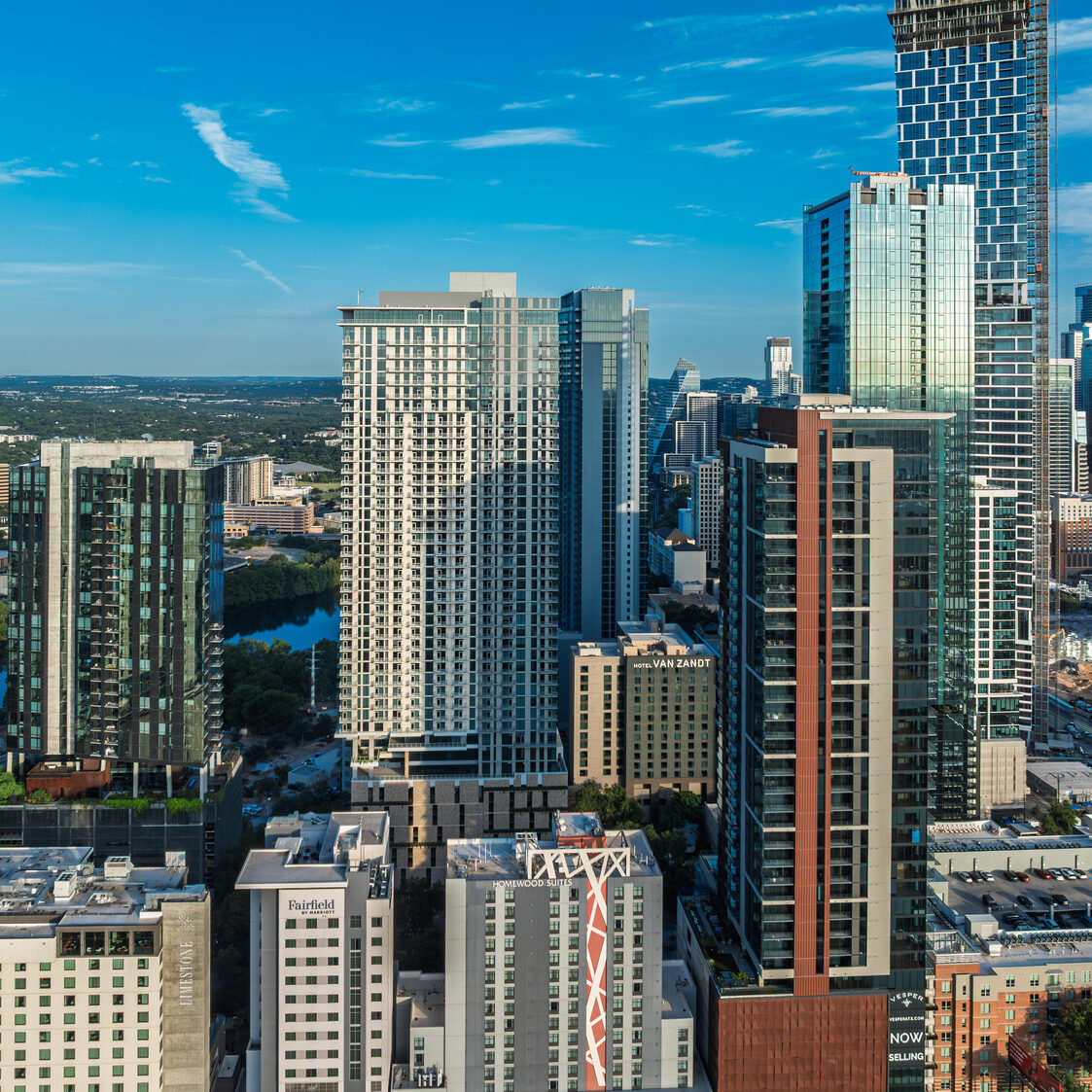
Surrounded by increasingly taller and more reflective glass towers, Paseo needed to stand out while still fitting naturally into the evolving district. Rather than creating another anonymous vertical structure, the project embraced the layered identity of Rainey Street through movement. The tower’s bright facade and playful balcony arrangement introduce rhythm and motion to the skyline, giving the building a dynamic quality that changes throughout the day. The staggered amenity decks appear to organically erode into the building mass.
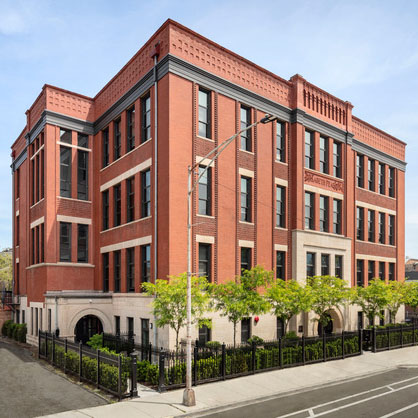
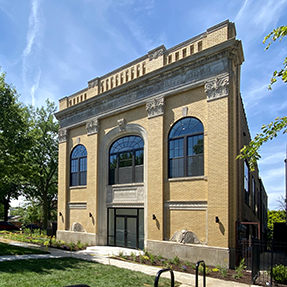
At the pedestrian level, the project becomes even more contextual. Existing bungalows were preserved and relocated. The project’s namesake paseo serves as more than a circulation path. It creates a shared public space that guides pedestrians from the active Rainey Street frontage toward Lady Bird Lake and the evolving Waller Creek Trail corridor.
This connection between city, neighborhood, and nature became central to the architectural approach. Because the building is highly visible from both the street and the lakefront, the facades were carefully considered from every vantage point. The result is a tower that contributes to both the pedestrian scale of Rainey Street and the Austin skyline.
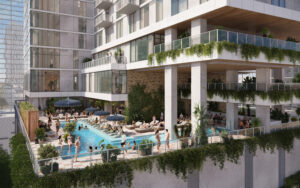
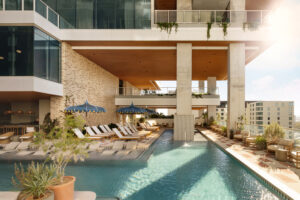
One of the challenges of vertical living is creating social energy away from the ground floor. At Paseo, the residential amenity levels, including the 11th floor decks and rooftop pool, were designed as elevated extensions of the neighborhood experience.
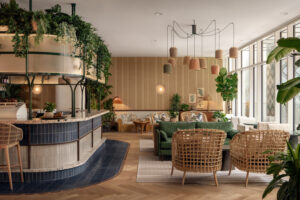
Rather than isolated amenity floors, these spaces function as layered social environments connected to views, landscape, and one another. The staggered terraces create moments of gathering, openness, and interaction that mirror the vibrancy found at street level below. The result is a tower that participates in the life of Rainey Street instead of simply occupying space within it.
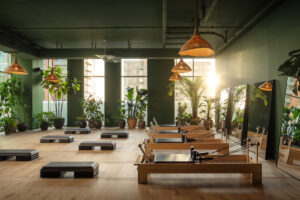
Paseo at 80 Rainey demonstrates that urban growth and neighborhood character can coexist. Through planning, preservation of existing buildings, and a bold architectural language, the project creates a direct dialogue between Austin’s past and future. In a district increasingly defined by towers, Paseo stands out not because it ignores its surroundings, but because it embraces them.